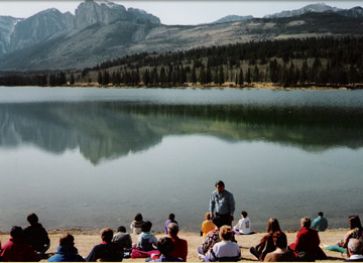
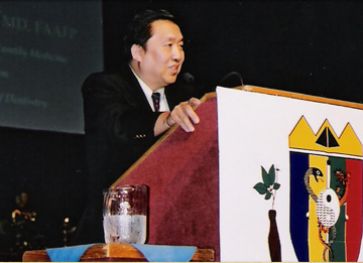
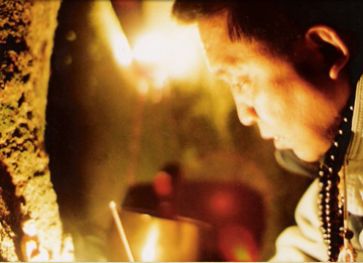
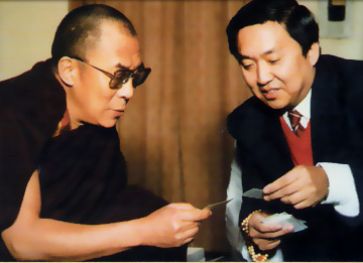
My heartfelt healing and blessings to all of you and your families. I have great faith that an emerging unity of the human spirit, love, and human determination will reveal new possibilities for healing and health.
Like the fragrant lotus that emerges from the mud, the beautiful compassion and resilience of Mother Earth will always blossom. After a storm, there is light. Wellness will prevail as we open our hearts. Please know my heart, spirit and blessings are with you all. Together we are a healthy world.
Sincerely yours with Mettã,
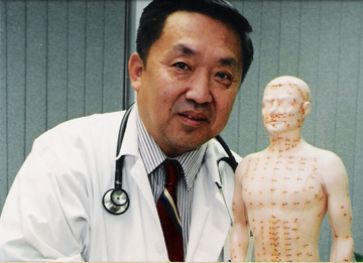
Dr. Steven K.H. Aung
Heartfelt blessing from Dr. Aung during COVID-19
I send blessings and positive energy to help those who are suffering, those ill with the COVID-19 virus, those facing death, those who are well and are working to be even healthier, those health care and service industry people who are working to save lives, children and elders, and all the people and sentient beings of our precious Mother Earth. I send my blessings with my wish to emerge from this moment of negative viruses with a stronger, brighter, healthier world for all of us and the birth of a healing paradise for future generations.
Sadhu Sadhu Sadhu Amya Amya Amya *audio file*
A healing energy exchange is very important today during the COVID-19 pandemic, and as your humble physician, teacher and colleague, I would like to share all my good karma with you, with metta, as well as the healing energy of the Eight Medicine Buddhas and the pagodas of the International Peace Pagoda Project that create universal healing. Enjoy the ancient audio chants, gifts from my teachers that I now share with you, knowing that you can create inner shifts that lead to vital healing results. These chants can also be done after you complete the Aung Vital Energy Medical Qi Gong exercises.
As you listen to the chants, please breathe in, hold your breath, then breathe out.
1. Medicine Buddhas and His Holiness the Dalai Lama
This chant releases the healing power of the Eight Medicine Buddhas, blessed by the His Holiness the Dalai Lama. My suggestion is to listen to the audio clip, then repeat each line 108 times in your meditation. You can repeat this chant another 108 times if you like.
Bhaigazay bhaigazay maha bhaigazay *audio file* (repeat phrase 108 times)
2. Healing Pagodas and Sayadaw Gyi U Thila Wunta
Araham araham araham araham araham araham araham araham araham *audio file* (repeat words 108 times )
This chant from the Honorable Sayadaw Gyi U Thila Wunta releases the healing power of world peace, international harmony and universal healing of the International Peace Pagoda Project. The healing pagodas provide environmental protection and positive healing. My suggestion is to listen to the audio clip, then chant the world ‘araham’ 108 times focusing on third eye.
Sadhu Sadhu Sadhu
Sadhu Sadhu Sadhu says that you are happy to share your merit with the people of our World. If you would like to share your merit, please repeat the chant three times at the end of your blessing.
Amya Amya Amya
Amya Amya Amya is an invitation to others to come and receive the merit you have created. Please do this offering three times to conclude the blessing.
Whatever I have done, with all my good merit, I wholehearted share with you. Take this from me and do better than I have done in this lifetime to create a healing universe for all human beings, animals, living organisms and the environment in our lives.
Sadhu Sadhu Sadhu Amya Amya Amya
Sadhu Sadhu Sadhu Amya Amya Amya
Sadhu Sadhu Sadhu Amya Amya Amya
I wholehearted share with you.
I bless you and your beloved families with all my love and heart.
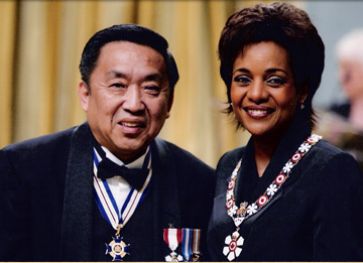
Dr. Steven K. H. Aung, CM AOE MD PhD FAAFP
International Peace Pagoda Project (IPPP)
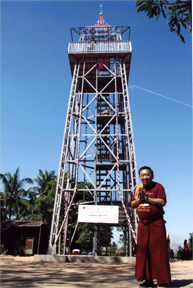 The International Peace Pagoda Project (IPPP) is a Buddhist construction project to promote world peace, universal healing, international harmony, & enlightenment.
In Dr. Aung’s own words…
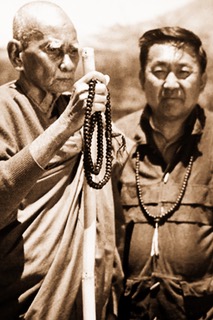
I would like to introduce the Venerable Sayadaw U Thila Wunta who has contributed so much with respect to this precious perspective. He was my teacher when I was a child growing up in Rangoon, Burma (now called Yangon, Myanmar). In those early days, in the 1950s and 1960s, he was an eminent Buddhist monk, while I was a very young student of the Dharma. The Venerable Sayadaw’s teaching endeavours are centred in the Dat Pon Zon Aung Min Guang Monastery (named after the Venerable Sayadaw’s teacher) in Yangon. I left Myanmar in the early 1970s, immigrating to Canada to pursue my integrative medical career. I temporarily lost direct personal contact with the Venerable Sayadaw, but maintained the spiritual (karma) link over the years by following his Buddhist teachings. In April 1986, our karma paths/links crossed once again directly. I was honoured to meet with the Venerable Sayadaw, when he came to Edmonton, Alberta, Canada and constructed a stupa at my home, in my backyard.
Constructing stupas is the Venerable Sayadaw’s vision and mission in life, which was given to him by his eminent Buddhist teacher, mentor and master, the Venerable Bodaw Aung Min Guang. The term ‘stupa’ derives from the ancient Sanskrit language, meaning the crown of one’s head. A stupa, a dome-shaped monument, may be a large and elaborate or just a simple humble village pagoda. Whatever the exact shape, size, place, position or monetary worth, a stupa is a vehicle/structure for enfolding and housing precious relics in commemoration of Buddhism in the interest of promoting world peace, harmony and healing. These relics represent samadhi — the most pure crystallization and fruit of devout prayer and meditation in the sprit of universal compassion cultivated by various eminent monks/masters and their devoted students over many years, decades, centuries and millennia. The Venerable Sayadaw has constructed many stupas, mainly in Myanmar, but also in several other countries such as Canada, Australia, New Zealand and South Africa. He carefully selects a suitable site based on the positive ‘spirit of place’(in traditional Chinese medicine this is termed good Feng Shui).With his assistants and supporters, he arranges for a local group to help in the construction of the stupa by supplying the stone, bricks, mortar, lime, wood, water and other basic building materials. He masterminds the construction of the stupa within a couple of weeks with the heartfelt help of a charitable group.During the construction phase, he meditates and chants mantras, sending mingala (positive healing energy) to the environment. After the stupa has been built and the relics have been properly selected and placed, he relies on volunteers to maintain the site as a centre of healing energy for the benefit of all sentient beings.
For example, on Galiano Island, British Columbia, Canada, the Crystal Mountain Buddhist group constantly maintains the stupa that the Venerable Sayadaw constructed in 1982 (www.crystalmountain.org). He is also the guiding light with respect to the Dharma Centre of Canada in Kinmount, Ontario (www.dharmacentre.org) and the Wangapeka Study and Retreat Centre in New Zealand (http://www.wangapeka.org)
As for myself, my family and our friends and colleagues, we constantly maintain the stupa that the Venerable Sayadaw constructed at my home in Edmonton. It was my honour to continue and keep my childhood commitment to help the Venerable Sayadaw construct a stupa in South Africa in a carefully selected locale near Cape Town, namely, Barrydale (www.barrydale.co.za/activitiesframe.htm) in December 2000, Brazil in 2006 and in Myanmar in 2008 & 2015.
The International Buddhist Friends Association
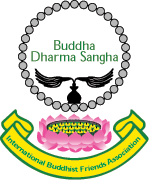 The International Buddhist Friends Association (IBFA) is a non-profit organization that was founded by Dr. Aung in 1980 and incorporated under the Alberta Societies Act in 1988 to promote the Buddha Dharma teachings, and to facilitate, enhance and empower cooperation and compassion among all Buddhist and other religious community groups around the world.
The IBFA became a member of the World Fellowship of Buddhists Bangkok Thailand in 1990.
Buddhist Activities
- Annual Wesak Celebration. Please click here for the 2011 Wesak program.
- Annual New Year Dinner
- Regular Monthly Meetings
- Buddhist and Interfaith Forums
- International Peace Pagoda Projects
- Public Lectures by various visiting teachers
- Special Events and conferences
- Spiritual Tours and Retreats
- Community Charity
IBFA logo explanation
The banner at the base of the logo gently but confidently enfolds the lotus flower.
The lotus is regarded throughout the East as a symbol of purity, gentleness, harmony and enlightenment. Usually depicted as closed, the open lotus shown in this logo represents openness to truth and tolerance towards all religious traditions. Circling above the lotus flower is the Buddhist rosary, which is used in meditation. Each bead of the rosary represents a distinct Buddhist community group.
Each bead is in contact with another but has its own individuality and is free to turn on its own. The gray shade of these beads symbolizes the first essential step toward complete solidity, grounding and inner strength. The large, black, pagoda-shaped bead in the centre of the logo is a constant reminder of the need to empty oneself to make room for one's growing awareness of ultimate reality.
The tassels at the top of the pagoda-shaped bead suggest that all those who seek enlightenment are moving in the same direction toward the health, happiness and harmony of all sentient beings. The three knots of eternity binding the tassels and the rosary together indicate total, disciplined commitment to Buddhism. The tassels are gently holding up the Triple Gem, namely, the Buddha, the Dharma and the Sangha.
Spirituality and Buddhism
“As human beings, we must learn to respect and live in harmony with Mother Nature. Most of all, we must strive to understand and appreciate where we are in our lives, why we exist, and who we are as beings.”
- Steven K.H. Aung, M.D.
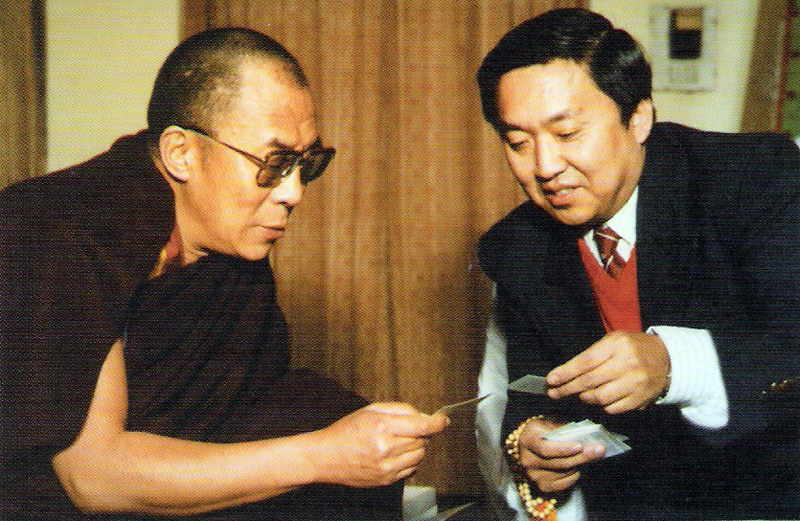 Buddhism is a path of practice and spiritual development leading to insight into the true nature of life. It has its origins about 2,500 years ago. The word comes from 'budhi’ - to awaken. Its philosophy is based on the teachings of Siddhartha Gotama, known as the Buddha.
Because Buddhism does not include the idea of worshipping a creator god, some people do not see it as a religion. The basic tenets of Buddhist teaching are straightforward and practical: nothing is fixed or permanent; actions have consequences; change is possible. Thus Buddhism addresses itself to all people irrespective of race, nationality, or gender. Buddhist practices such as meditation are means of changing oneself in order to develop the qualities of awareness, kindness, and wisdom.
Upcoming Events
| No events |
For Interest
For Interest
The Aung family wishes to sadly announce that Dr. Aung passed away peacefully on Oct. 26, 2025. In lieu of flowers, please refer to the above link for selected charities supporting causes that were important to Dr. Aung and that can be made in Dr. Aung's memory.